

News
All-in-One Energy Storage Inverter System: Integrated Design Enhances Energy Management Efficiency
Integrated Design Addresses Three Key Energy Storage Requirements
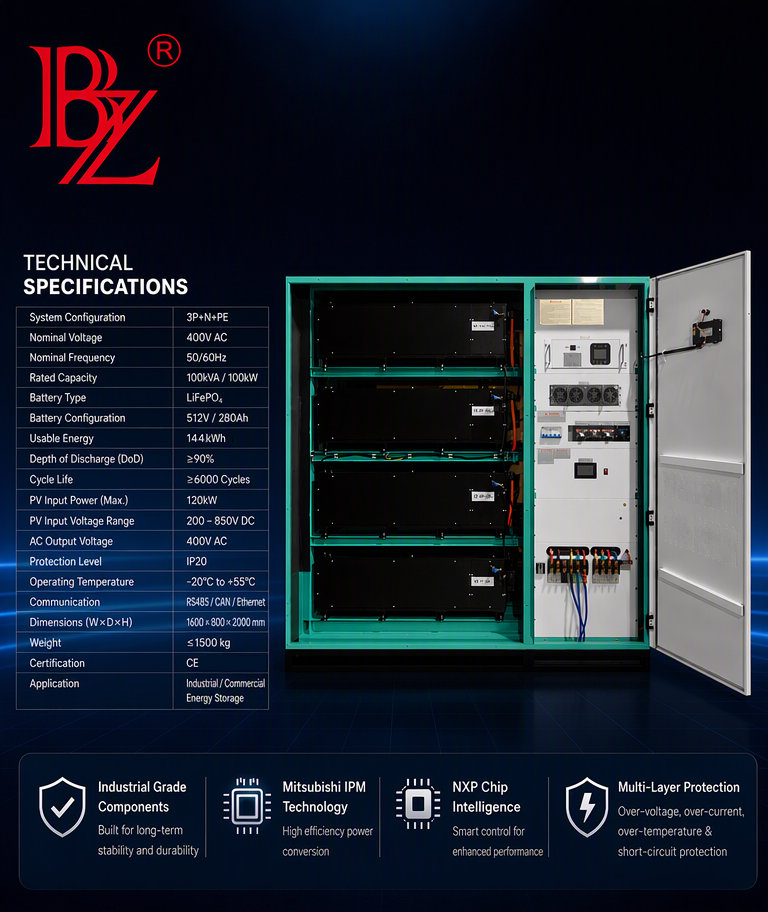
Traditional energy storage projects typically require separate battery cabinets, power conversion systems, energy management systems, and distribution protection equipment. As the number of devices increases, onsite wiring, communication protocol matching, parameter commissioning, and operation and maintenance become more complex.
An all-in-one energy storage inverter system consolidates key functions on a unified platform and establishes a coordinated control architecture centered on energy storage, power conversion, management, and safety. For residential energy storage, small commercial and industrial projects, off-grid power stations, and microgrids, an integrated design can help shorten the system integration chain and improve the repeatability of project delivery.
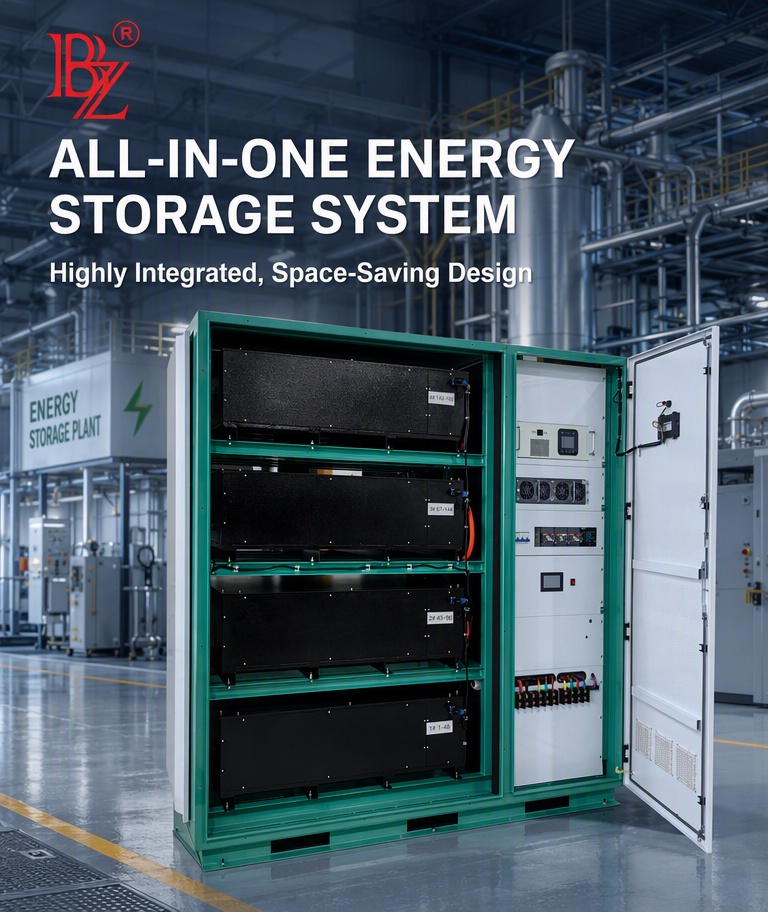
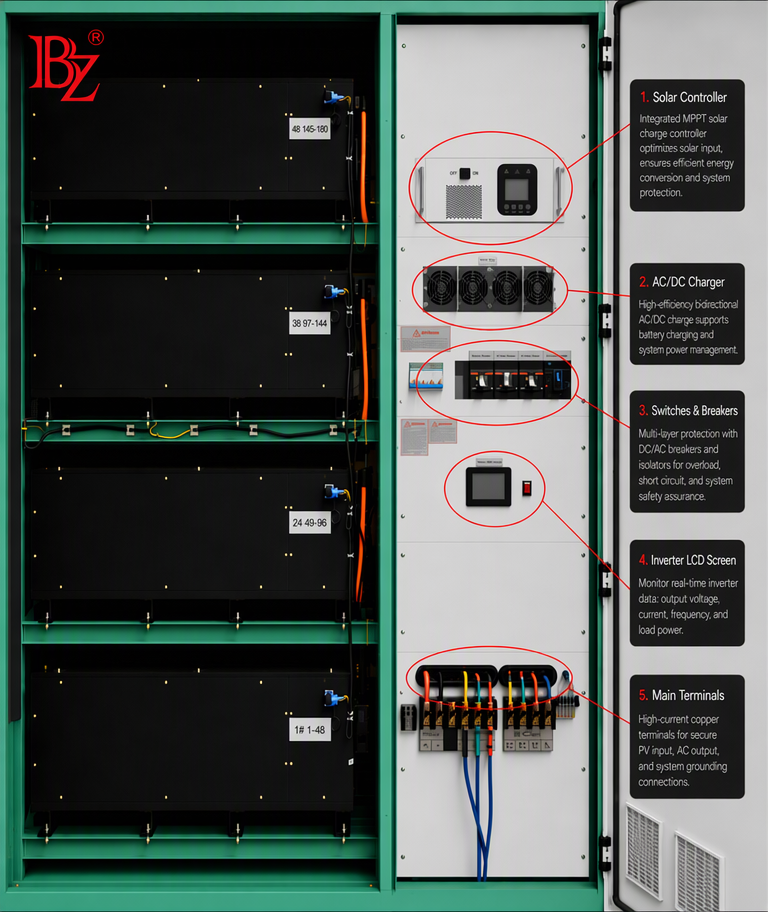
What Are the Core Modules of an All-in-one Energy Storage Inverter System?
| Core Module | Main Function | Project Value |
|---|---|---|
| Battery system | Stores electricity from solar generation or the grid and releases it according to load demand | Increases the ability to use renewable energy locally |
| BMS | Monitors voltage, current, temperature, and state of charge while implementing protection strategies | Supports safe battery operation and status management |
| PCS/energy storage inverter | Enables bidirectional conversion between DC and AC power | Connects the battery, solar PV system, loads, and grid |
| EMS | Develops operating strategies based on electricity prices, loads, solar output, and battery status | Optimizes charging, discharging, and energy dispatch |
| Distribution and protection unit | Provides short-circuit, overcurrent, overvoltage, overtemperature, and isolation protection | Helps reduce operational risks |
| Communication and monitoring interface | Supports local display, remote monitoring, and data management | Makes it easier for operators to check system status |
Moving from Equipment Integration to Energy Coordination
The value of an all-in-one system is not limited to installing multiple devices in the same cabinet or enclosure. More importantly, its control strategies enable coordinated energy management. For example, when solar output is high, the system can prioritize battery charging or supply local loads. During peak electricity periods, it can discharge stored energy according to the user's operating strategy. In the event of grid abnormalities, systems with the corresponding configuration can also switch to backup or off-grid operation.
Actual operating performance depends on the battery type, inverter rated power, load characteristics, on-grid/off-grid switching strategy, local grid-connection requirements, and installation environment. Project selection should therefore not be based on battery capacity alone. System efficiency, protection rating, thermal management design, communication protocols, certification requirements, and after-sales service should also be reviewed.
What Applications Are Suitable for All-in-one Systems?
- Residential energy storage: Increases the self-consumption of rooftop solar power and provides backup power for critical household loads.
- Commercial and industrial peak shaving and valley filling: Schedules charging and discharging according to load profiles and electricity pricing strategies to reduce demand during peak periods.
- Off-grid and weak-grid applications: Provides stable power support for remote areas, telecommunications base stations, farms, and outdoor facilities.
- Microgrid systems: Works with solar PV, wind power, diesel generators, or charging facilities to create a dispatchable integrated energy system.
- Emergency backup power: Provides continuous power support for critical equipment during grid fluctuations or outages. Actual switching performance depends on the product specifications and system configuration.